
The Origin of Japanese Concert Halls — succeed, 1992
The Hall itself is an Instrument
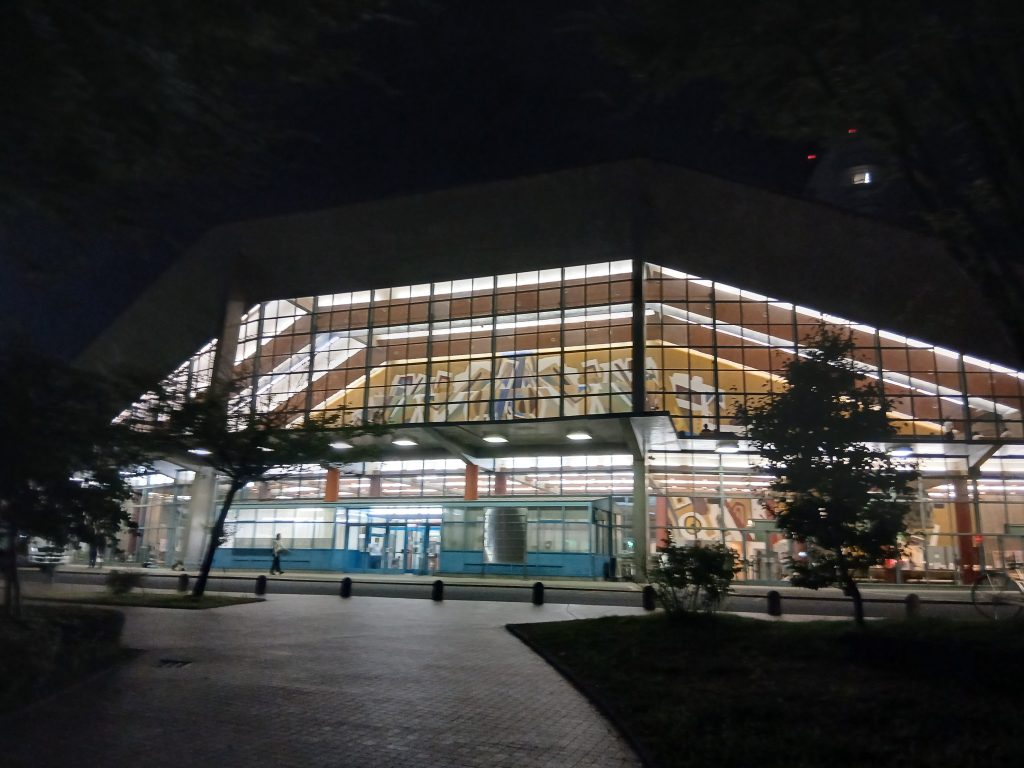
The Origin — GUNMA MUSIC CENTER, 1961
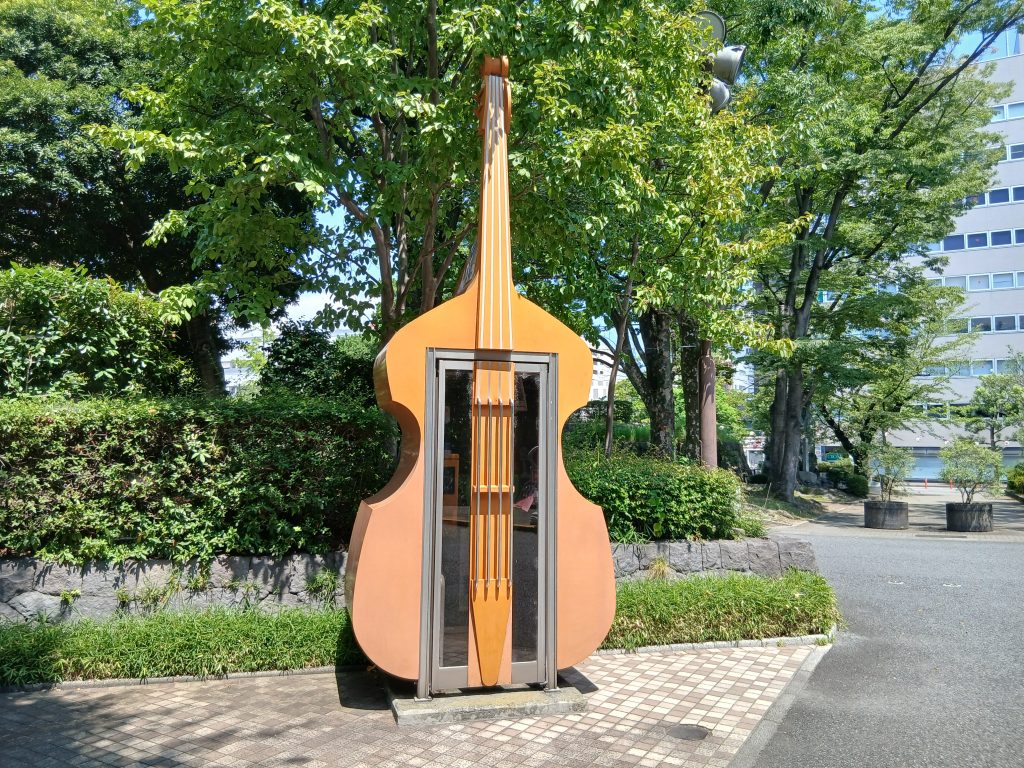
Phone booth nearby
日本の地方都市の音楽ホールの先駆けとなった建物の隣に、後から建てられたホール。主ホールの精神を継承し、その役割を調和しながら補ってきた。主に、日本を代表する市民オーケストラの練習拠点として使用されてきた。
中核ホール「GUNMA MUSIC CENTER」は、まだ日本の地方にホールがなかった66年前の1961年に市民運動によって開館。他地域に次々とホールが建設されたのはそれから約20年後と言われている。
市民の寄付金によって建設費の大部分が賄われたのは、第二次世界大戦終戦3ヶ月後に、物心ともに空虚だった中で、同市で文化を基盤とした平和な国家の実現を目指して誕生した市民オーケストラ「群馬交響楽団」の存在があった。
そのオーケストラは山間部の学校や社会から隔離されたハンセン病患者の施設、少年院も巡回演奏を差別なく行い、地道に努力する姿は戦後10年に全国映画となり反響を呼んだ。「プラハの春」「ウィーン芸術週間」に日本で初めて同時招待され、その後もドキュメンタリードラマが日本全国で話題になった。1956年に群馬県は文部省から全国初の「音楽モデル県」に指定され、これもホール建設の契機となった。
ホールの設計者は、ユダヤ系チェコ人の近代建築の巨匠Antonin Raymond。第二次世界大戦中は亡命していた米国で、戦前18年働いた日本への愛情に苦渋しながら、日本の首都の空襲事前実験に参加。母国に残した家族は消息不明となっている中だったという――。
戦後、文化への真摯な姿勢を応援され日本で活動し、即興の対話ダンスをするようなデザインのホールを周囲の旧城の景観との調和に配慮し無償で設計した。地方の大工では建設は無理と言われたが、同市の大工が誇りを持って速く正確に完成させた。
戦前からRaymondを知る高崎の実業家が、戦後日本に戻り、民衆のための芸術を大切にしながら、建築の仕事に励むRaymondを見て、音楽ホールの設計者として推薦した。Raymondは音楽ホールをつくろうと市民が主体的に盛り上がる姿に心を打たれ、自由と平和への希望を込めて、正式依頼の前の市民にイメージを伝えるための模型を無料でつくった。
建物の細部から全体まで自由でリズミカルで、民主主義的デザインを施している。1999年にオランダに本部を置く近代建築保存組織DOCOMOMOの重要建築に選定されるなど、今も世界の建築界から高く評価されている。
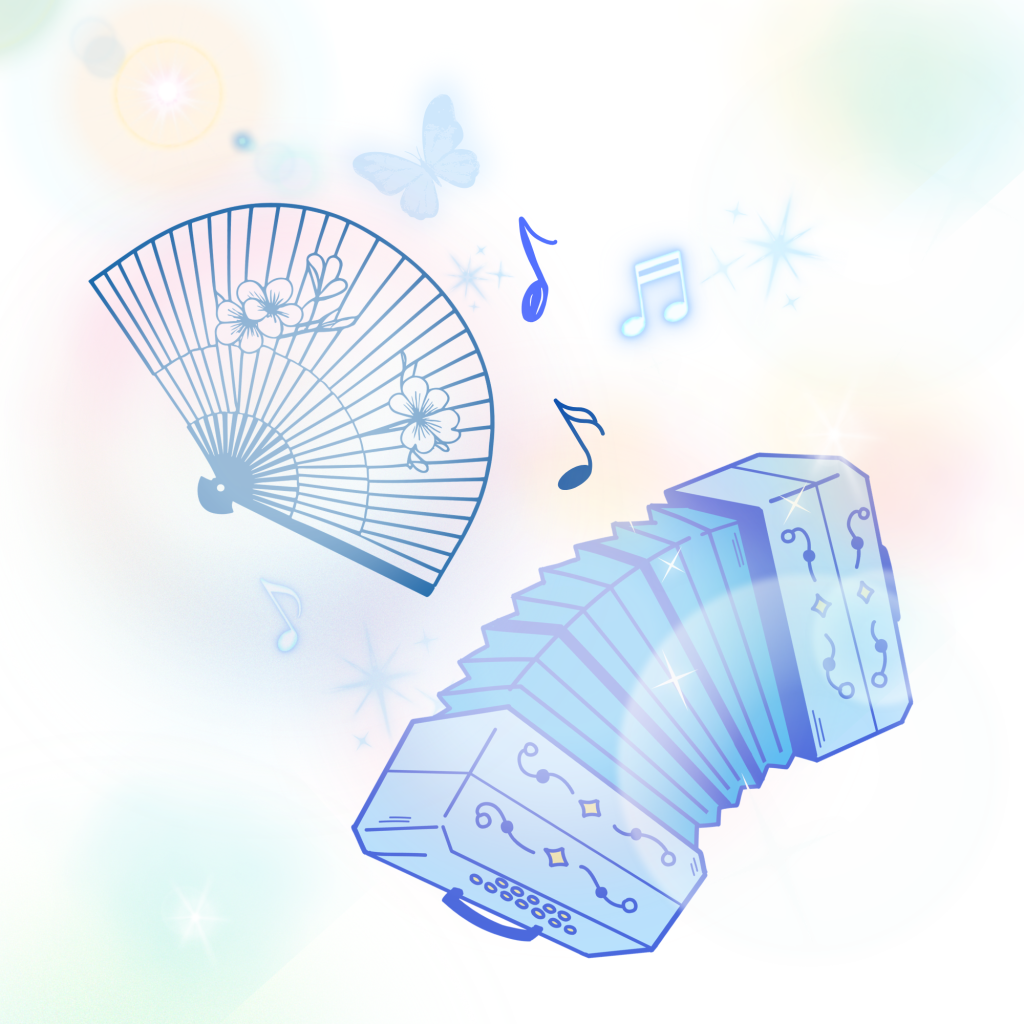
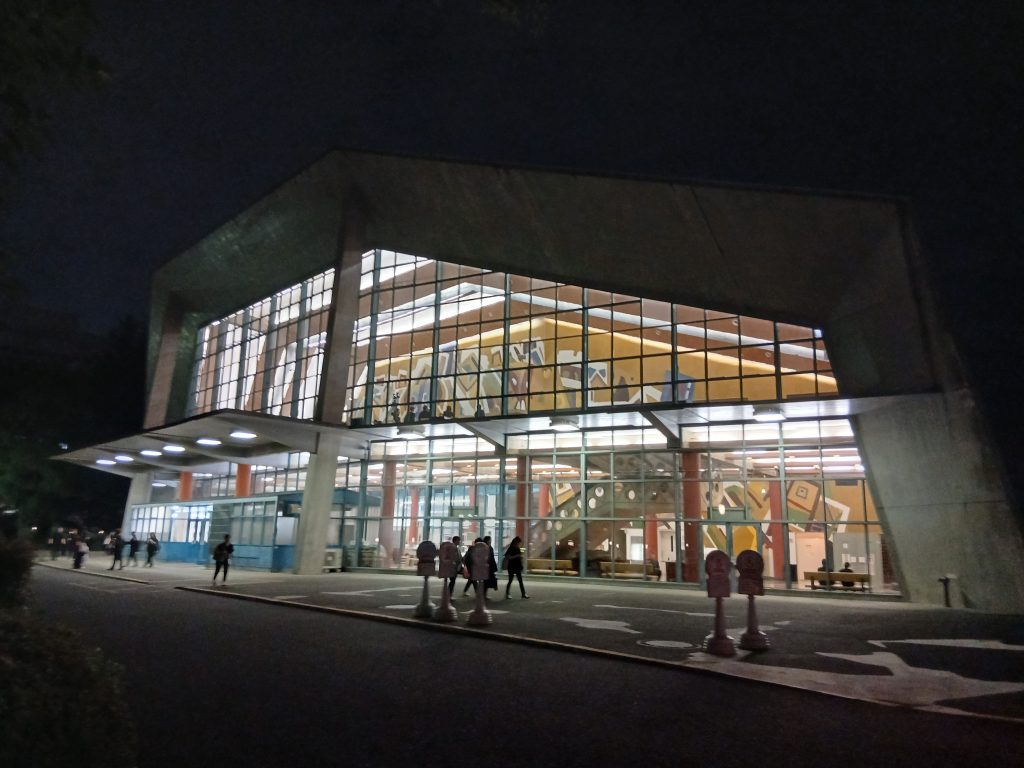
音楽ホールそのものこそ最大の楽器であるという基本を大切にし、ギリシャやローマの民主制を反映した円形劇場を模倣して、客席と舞台を同一平面化し、音の伝播の均一化を図った。横から見るとコンクリートを折り曲げた形が繰り返される全形は、蛇腹の楽器アコーディオンに似ており、耐性もある。正面はガラス張りの窓が覆い、夜は照明で内部が鮮やかに浮かび上がり、カラフルな幾何学図形が即興ダンスをするように交錯する世界最大級フレスコ壁画や、 龍が天昇するかのような螺旋階段が映える。周囲の景観との調和にも配慮したホールで、城の旧跡である濠がとりまく美しい石垣と松の風景を損なわないように造られた。
このホールを改めて眼前にし、その場に触れた時に、先人への尊敬や感謝、ホールの機能を強く意識し振付が定まった。今後も表現する場を知り、その効用を最大限生かしたい。
Junto al edificio que se convirtió en un pionero entre los auditorios musicales de las ciudades regionales de Japón, se encuentra una sala construida posteriormente. Ha heredado el espíritu del auditorio principal y ha complementado su función de manera armoniosa. Principalmente, ha servido como base de ensayo de una de las orquestas ciudadanas más representativas del país.
El auditorio central, el GUNMA MUSIC CENTER, abrió sus puertas en 1961 —hace 66 años— gracias a un movimiento ciudadano, en una época en la que aún no existían salas de conciertos en las regiones de Japón. Se dice que otras zonas comenzaron a construir auditorios unos veinte años después.
Que la mayor parte de los costos de construcción se cubriera con donaciones ciudadanas se debió en gran medida a la existencia de la GUNMA SYMPHONY ORCHESTRA, una orquesta cívica fundada tres meses después del fin de la Segunda Guerra Mundial, en un momento de profundo vacío material y espiritual. La orquesta nació en la ciudad con el objetivo de construir una nación pacífica basada en la cultura.
La orquesta realizó giras sin discriminación por escuelas de montaña, instituciones para personas con lepra aisladas de la sociedad y centros de detención juvenil. Su esfuerzo constante se convirtió en una película nacional diez años después de la guerra y causó gran impacto. Fue la primera en Japón en ser invitada simultáneamente al “Festival de Primavera de Praga” y a la “Semana del Arte de Viena”, y posteriormente un drama documental sobre ella generó gran repercusión en todo el país.En 1956, la Prefectura de Gunma fue designada por el Ministerio de Educación como la primera “Prefectura Modelo de Educación Musical” del país, lo que también sirvió como un impulso para la construcción del auditorio.
El arquitecto del auditorio fue Antonin Raymond, un maestro de la arquitectura moderna de origen judío checo. Durante la guerra, exiliado en Estados Unidos, participó con pesar en experimentos previos a los bombardeos sobre Tokio, a pesar de su profundo afecto por Japón, donde había trabajado durante 18 años antes del conflicto. Su familia, que había quedado en su país natal, desapareció sin dejar rastro.
Tras la guerra, alentado por quienes valoraban su actitud sincera hacia la cultura, retomó su actividad en Japón. Diseñó el auditorio de manera gratuita, cuidando la armonía con el paisaje del antiguo castillo y creando un espacio que evocaba una danza dialogada e improvisada. Aunque se decía que los carpinteros locales no podrían construirlo, los artesanos de la ciudad lo completaron con orgullo, rapidez y precisión.
Un empresario de Takasaki que conocía a Raymond desde antes de la guerra lo recomendó como arquitecto del auditorio al verlo regresar a Japón y dedicarse a la arquitectura mientras defendía el arte para el pueblo. Raymond quedó profundamente conmovido por el entusiasmo ciudadano por construir un auditorio de manera autónoma y, antes de recibir el encargo formal, elaboró gratuitamente una maqueta para transmitir su visión, impregnada de esperanza por la libertad y la paz.
El diseño del edificio —desde los detalles hasta la forma general— es libre, rítmico y democrático. En 1999 fue seleccionado como obra importante por DOCOMOMO, la organización internacional de conservación de arquitectura moderna con sede en los Países Bajos, y sigue siendo altamente valorado en el mundo.
El auditorio encarna el principio de que la sala misma es el mayor instrumento. Inspirado en los anfiteatros democráticos de Grecia y Roma, el escenario y el público se situaron en un mismo plano para lograr una propagación uniforme del sonido. Visto de lado, el repetido pliegue del hormigón recuerda al fuelle de un acordeón y aporta resistencia estructural.
La fachada de vidrio se ilumina por la noche, revelando uno de los murales al fresco más grandes del mundo —donde figuras geométricas de colores se cruzan como en una danza improvisada— y una escalera de caracol que asciende como un dragón elevándose al cielo. El auditorio fue construido con especial atención a la armonía con el entorno, de modo que no se alterara la belleza de los muros de piedra y los pinos que rodean el foso del antiguo castillo.
Al volver a situarme frente a este auditorio y sentir el lugar, la coreografía tomó forma de manera natural, impulsada por el respeto y la gratitud hacia quienes nos precedieron, y por una renovada conciencia de la función del espacio. Deseo seguir conociendo los lugares de expresión y aprovechar al máximo su potencial.
Next to the building that became a pioneer of music halls in regional Japan stands a hall constructed later. It has inherited the spirit of the main hall and has complemented its role in harmonious ways. It has been used primarily as the rehearsal base for one of Japan’s leading civic orchestras.
The core hall, the GUNMA MUSIC CENTER, opened in 1961—67 years ago—through a citizens’ movement, at a time when no concert halls yet existed in regional Japan. It is said that other regions began building halls only about twenty years later.
A major reason why most of the construction costs were covered by citizens’ donations lies in the existence of the GUNMA SYMPHONY ORCHESTRA, a civic orchestra founded just three months after the end of World War II in a time of profound material and emotional emptiness. The orchestra was born in the city with the aim of realizing a peaceful nation grounded in culture.
The orchestra performed without discrimination, touring mountain schools, facilities for people with Hansen’s disease who were isolated from society, and juvenile detention centers. Their steady efforts became the subject of a nationwide film ten years after the war and drew great attention. They were the first in Japan to be invited simultaneously to the “Prague Spring” and the “Vienna Festival,” and later a documentary drama about them became widely discussed across the country.In 1956, Gunma Prefecture was designated by the Ministry of Education as Japan’s first “Model Prefecture for Music Education,” which also became a catalyst for the construction of the hall.
The hall’s architect was Antonin Raymond, a Jewish Czech master of modern architecture. During World War II, while living in exile in the United States, he reluctantly participated in pre‑air‑raid experiments on Tokyo, despite his deep affection for Japan where he had worked for 18 years before the war. His own family left behind in his homeland had gone missing.
After the war, encouraged by those who valued his sincere attitude toward culture, he resumed his work in Japan. He designed the hall free of charge, taking care to harmonize it with the landscape of the former castle site, and creating a space that feels like an improvised dialogue dance. Although local carpenters were said to be incapable of constructing such a building, the carpenters of the city completed it with pride, speed, and precision.
A businessman from Takasaki who had known Raymond before the war recommended him as the architect for the music hall after seeing him return to Japan and devote himself to architecture while cherishing art for the people. Raymond was deeply moved by the citizens’ enthusiasm to build a music hall on their own initiative, and before receiving the formal commission, he created a model free of charge to convey his vision to them, embedding his hopes for freedom and peace.
The building’s design—from its details to its overall form—is free, rhythmic, and democratic. In 1999, it was selected as an important work by DOCOMOMO, the international organization for modern architectural preservation based in the Netherlands, and it continues to be highly regarded worldwide.
The hall embodies the principle that the concert hall itself is the greatest instrument. Inspired by the democratic amphitheaters of Greece and Rome, the seating and stage were placed on the same plane to achieve uniform sound propagation. Viewed from the side, the repeated folded‑concrete form resembles the bellows of an accordion and provides structural strength.
The glass facade glows vividly at night, revealing one of the world’s largest fresco murals—where colorful geometric shapes intersect like an improvised dance—and a spiral staircase rising like a dragon ascending to the heavens. The hall was built with careful attention to harmony with the surrounding scenery, ensuring that the beautiful stone walls and pine trees around the former castle moat were not disturbed.
Standing before the hall again and feeling the atmosphere of the place, I found that my choreography naturally took shape as respect and gratitude toward our predecessors, and as a renewed awareness of the hall’s function. I hope to continue learning from the spaces in which we express ourselves and to make the fullest use of their potential.
© 2026 Rika Ogasawara